
An LTM device configured with a management IP address and route and a series of self-IPs and TMM routes. Both management and TMM have a routing entry for 101 10/24 Application traffic is being load balanced and sent to pool member 10.1.1.123 with SNAT Automap and configured.
Which route will the LTM device use?
Which process can be eliminated by terminating SSL communication on the LTM device rather than the backend pool members?
An LTM device provides load balancing to a web application? The LTM device has two dual-core processors and a licensed SSL Transactions Per Second (TPS) limit of 500 CMP is enabled.
TLS connections are used between client systems and virtual servers on the LTM device, as well as from the LTM device to servers used as part of LTM pool.
TLS enabled virtual servers utilize certificates based on 2048-bit keys
During a peak period. 2560 new TLS transactions per second are attempted to the web application via the LTM device.
What will happen in this scenario?
Six servers have a varying number of connections that change based on the user load.
Which load balancing method should an LTM Specialist apply to divided the web application traffic to the servers on the relative performance trend?
An LTM Specialist upgrades the switching infrastructure and the backend servers on the LAN segments.
The LTM Specialist notices a 20% memory usage increase on the BIG-IP device while handling the same number of concurrent connections.
A comparison of statistics pre-upgrade and post-upgrade shows a significant reduction on the following:
-RTT between the BIG-IP device and the backend servers
-Packet drops in the switch
Time to First Byte (TTFB)
The LTM Specialist is concerned with the scalability of the number of concurrent connections with the new memory usage.
Which setting should be changed to reduce the memory usage on the BIG-IP device?
An LTM Specialist must reconfigure a BIG-IP LTM system that load balances traffic to web application servers. The application developer inform the LTM Specialist that TLS must be used to communicate
with the application servers.
Which additional profile is required as part of virtual server configuration?
Refer to the exhibit.
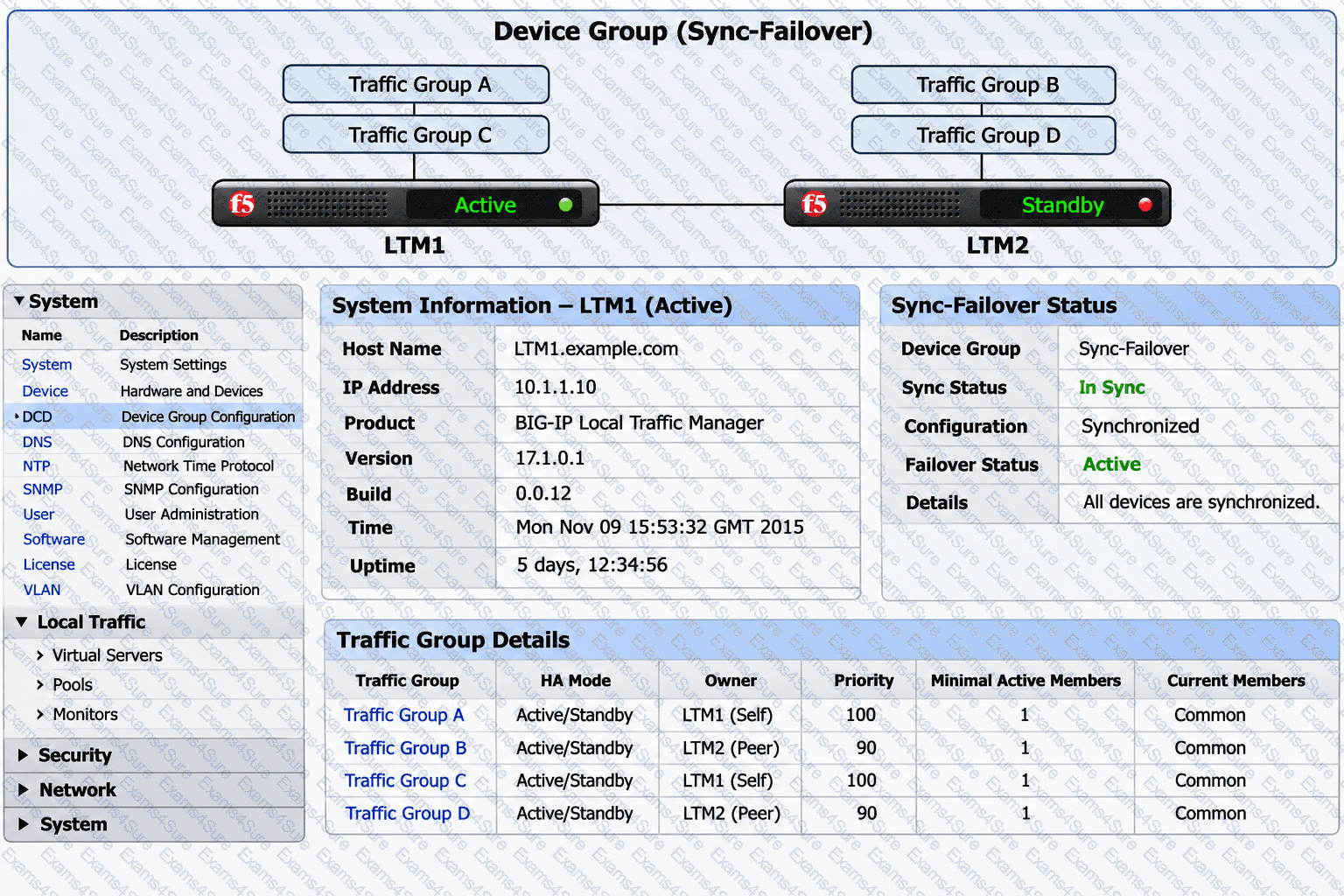
The LTM devices LTM3 and LTM2 have four Traffic Groups defined with approximately the sar of failover objects defined in each group.
- Traffic Groups A and C have Default Device set to LTM1
- Traffic Groups Band D have Default Device set to LTM2.
- Traffic Groups B and C do NOT have Auto Failback enabled. Traffic Groups A and D have Auto Failback enabled with a timeout value of 60 seconds.
- Traffic Groups A and D have Auto Fallback enabled with a timeout value of 60 seconds.
Both LTM devices are healthy and able to pass traffic for any Traffic Group.
LTM1 loses connectivity on interface 1.4. The LTM Specialists notified 60 seconds after the interface goes down.
What is the state of the Traffic Groups on each LTM device?
SNAT for 65,000 concurrent connections
An LTM Specialist needs to apply SNAT to a virtual server that processes 65,000 concurrent connections. What should the LTM Specialist do? (Choose one answer.)
A node is assigned two monitors as seen in this configuration.
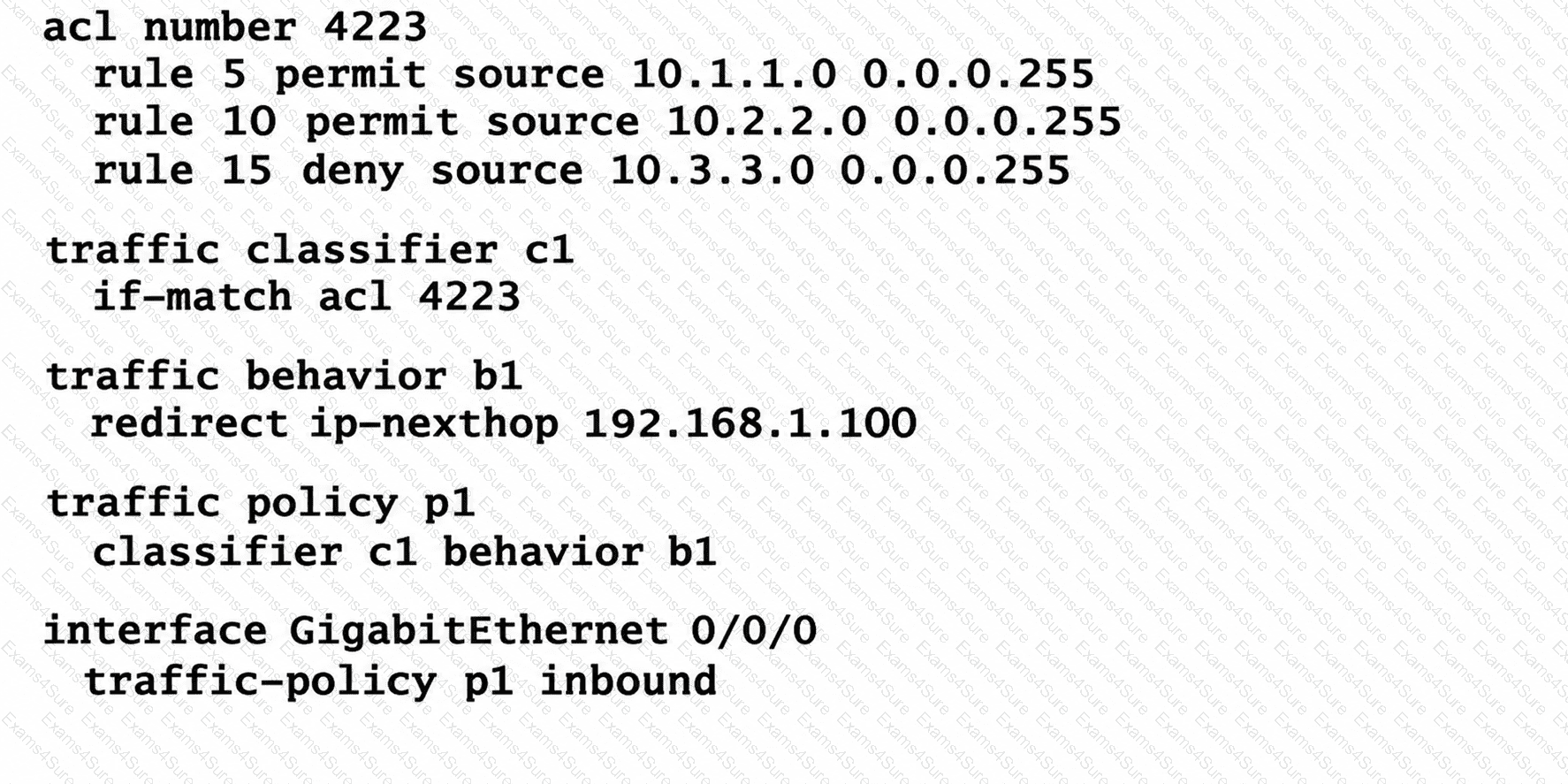
What is the status of a member that runs on that node and listens on port 443?
An LTM device needs to be configured a virtual server. The application requires SSL encryption from the client to the server and an X-Forwarded-For added by the LTM device.
Which virtual server type should the LTM Specialist use?