
You have an Azure subscription that contains an Azure Cosmos DB for NoSQL database named DB1. The shared throughput provisioned for DB1 is 10,000 DTU/s. DB1 contains the containers shown in the following table.
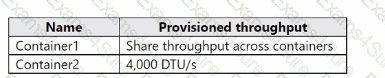
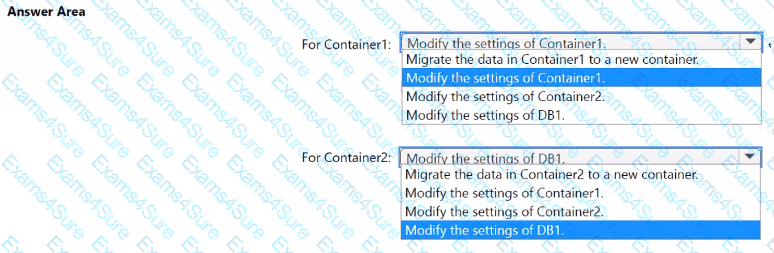
You need to modify the throughput for the containers. The solution must meet the following requirements:
• The maximum throughput for Container1 must be 4,000 DTU/s.
• The throughput for Contained must be shared across the containers.
• Administrative effort must be minimized.
What should you do? To answer, select the appropriate options in the answer area. NOTE: Each correct selection is worth one point.

You have an Azure Cosmos DB for NoSQL account named account1 that has a single read-write region and one additional read region. Account1 uses the strong default consistency level.
You have an application that uses the eventual consistency level when submitting requests to account1.
How will writes from the application be handled?
You plan to implement an Azure Cosmos DB container that will store telemetry data from 1,000 loT devices. The data will be updated once every minute. An app will read the data once daily and generate aggregated reports that summarize the state of each device.
You need to configure a partition key for the container. The solution must meet the following requirements:
• Minimize the possibility of reaching the partition limits.
• Spread read and write operations evenly across the partitions.
• Minimize how long it takes to locate a specific set of telemetry values.
To what should you set the partition key?
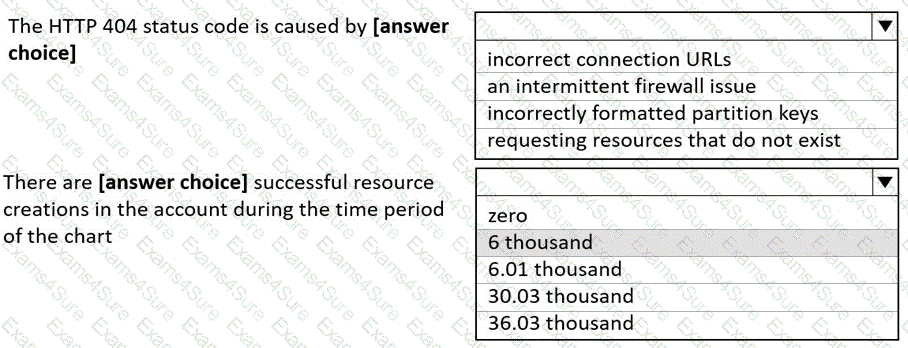
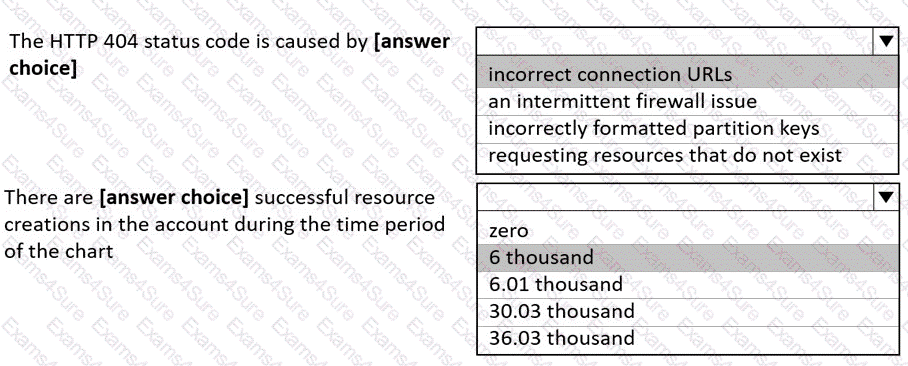
You have an Azure Cosmos DB Core (SQL) API account used by an application named App1.
You open the Insights pane for the account and see the following chart.
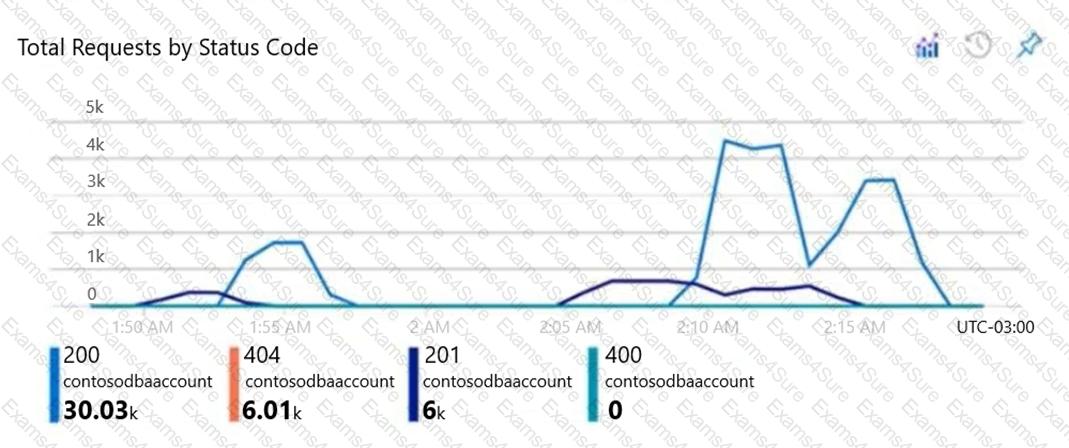
Use the drop-down menus to select the answer choice that answers each question based on the information presented in the graphic.
NOTE: Each correct selection is worth one point.

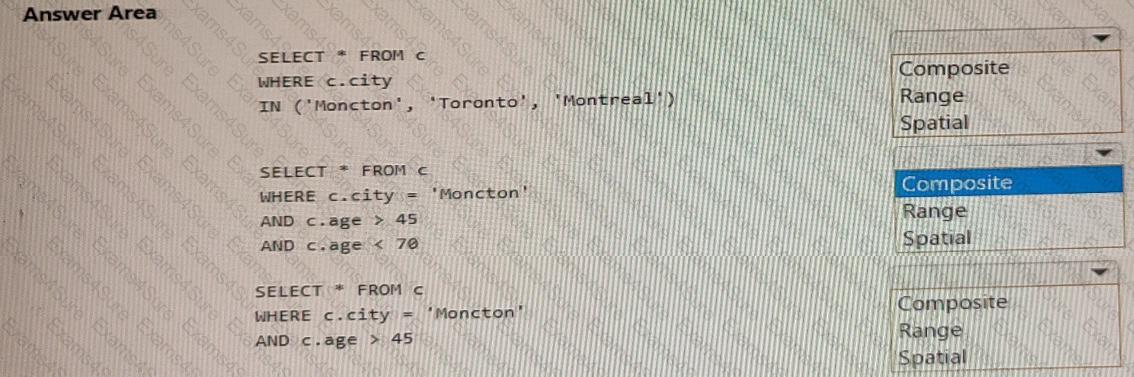
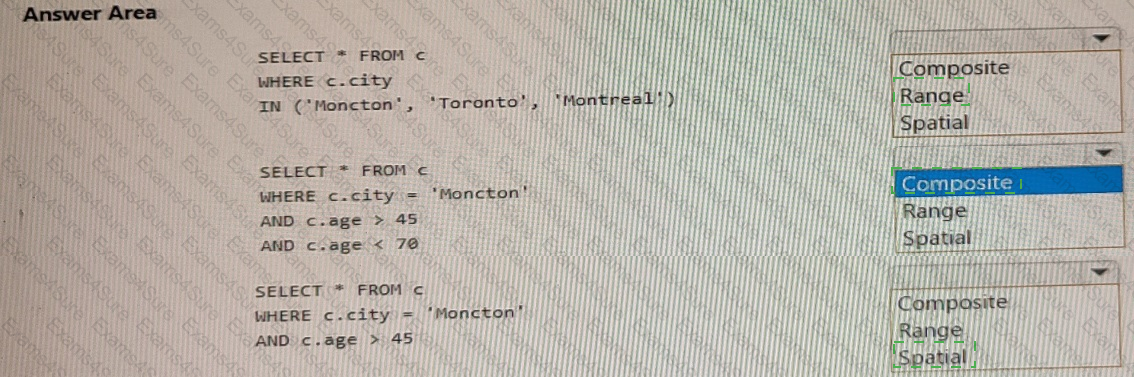
You have an Azure Cosmos DB for NoSQL account that frequently receives the same three queries.
You need to configure indexing to minimize RUs consumed by the queries.
Which type of index should you use for each query? To answer, select the appropriate options in the answer area.
NOTE: Each correct selection is worth one point.
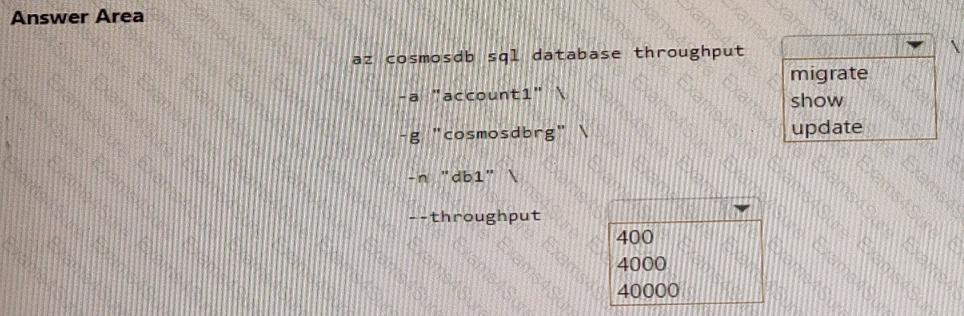
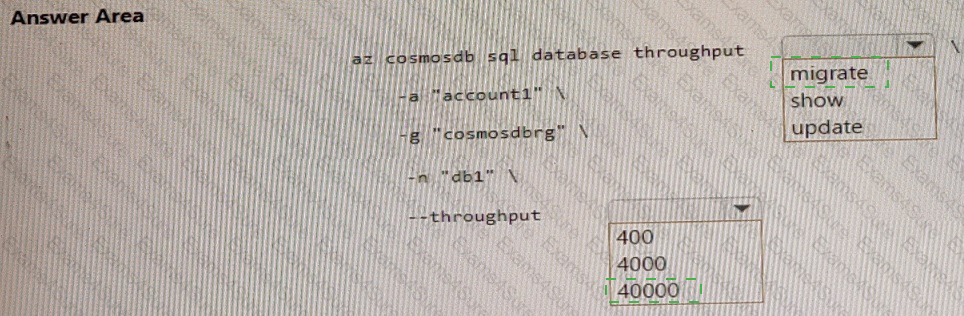
You have a database named db1 in an Azure Cosmos DB for NoSQL account named account1. The db1 database has a manual throughput of 4,000 request units per second (RU/s).
You need to move db1 from manual throughput to autoscale throughput by using the Azure CLI. The solution must provide a minimum of 4,000 RU/s and a maximum of 40,000 RU/s.
How should you complete the CLI statements? To answer, select the appropriate options in the answer area.
NOTE: Each correct selection is worth one point.
You have an Azure Cosmos DB database that hosts a container named container1.
You need to ensure that the items stored in contained will NOT expire unless their TTL value is set explicitly. What should you do?
You have an Azure Cosmos DB database named databaset contains a container named container1. The container1 container store product data and has the following indexing policy.

Which path will be indexed?
You have an Azure subscription that contains an Azure Cosmos DB for NoSQL account. You create a container and assign the following indexing policy.
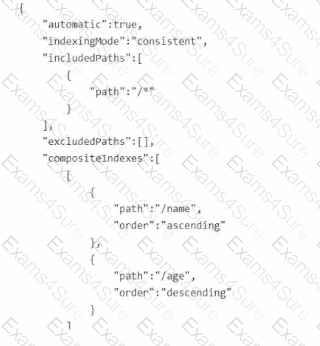
You run the queries shown in the following table.
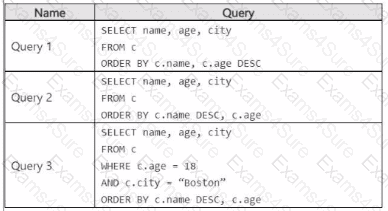
For each of the following statements, select yes if the statement is true. Otherwise, select No
NOTE: Each correct selection is worth one point.


You have an Azure Cosmos DB for NoSQL account that contains a database named DB1. Users run the following query against DB1.
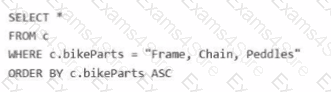
You add an index to the recordset.
You need to change the ORDER by syntax of the query to optimize the use of the index. The solution must NOT change the result set.
Which syntax should you use?
Which syntax should you use?




