
Exam style questions across every 400-007 domain
Last Update 8 hours ago
Total Questions : 503
Start with our free 400-007 practice questions, carefully crafted to mirror the domains, phrasing, and difficulty of the real CCDE v3.0 exam. Each 400-007 exam question comes with a detailed rationale that explains not just which answer is correct but why the others fall short. That's how concepts stick. Use the free set to benchmark yourself: identify your Cisco weak domains, see where you're losing marks, and build a focused study plan in minutes.

A business requirement stating that failure of WAN access for dual circuits into an MPLS provider for a Data Centre cannot happen due to related service credits that would need to be paid has led to diversely routed circuits to different points of presence on the provider’s network. What should a network designer also consider as part of the requirement?
A Tier-3 Service Provider is evolving into a Tier-2 Service Provider due to the amount of Enterprise business it is receiving. The network engineers are re-evaluating their IP/MPLS design considerations in order to support duplicate/overlapping IP addressing from their Enterprise customers within each Layer3 VPN. Which concept would need to be reviewed to ensure stability in their network?
Which two possible drawbacks should you consider when introducing Network Functions Virtualization in a network design? (Choose two.)
Drag and drop the characteristics from the left onto the corresponding network management options on the right.
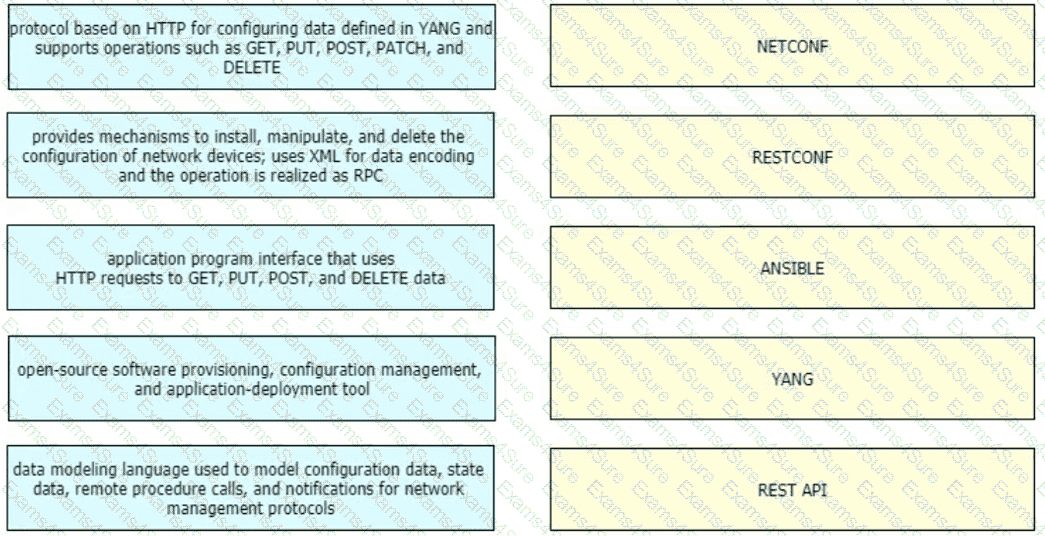
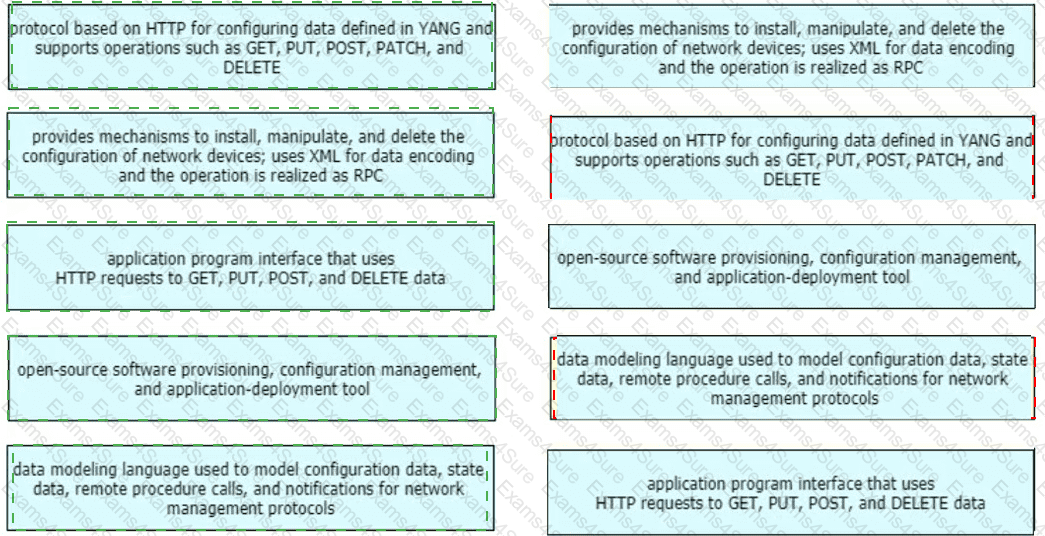
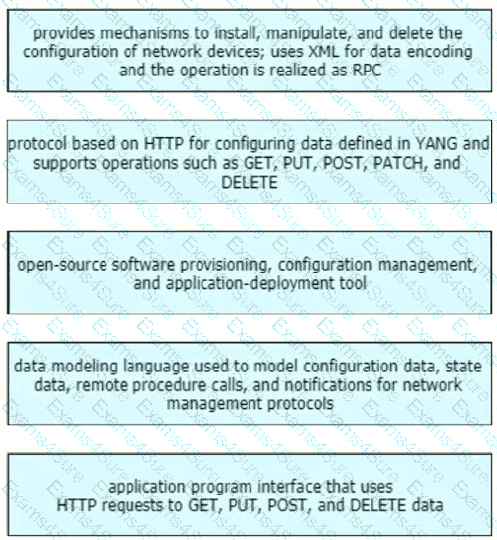 Text Description automatically generated
A rapidly growing e-commerce business with a global customer base needs a robust network design that can support their business-critical operations and ensure low-latency access for their customers around the globe. The IT team is considering different solutions to meet their requirements. Which network design is suitable for these needs?
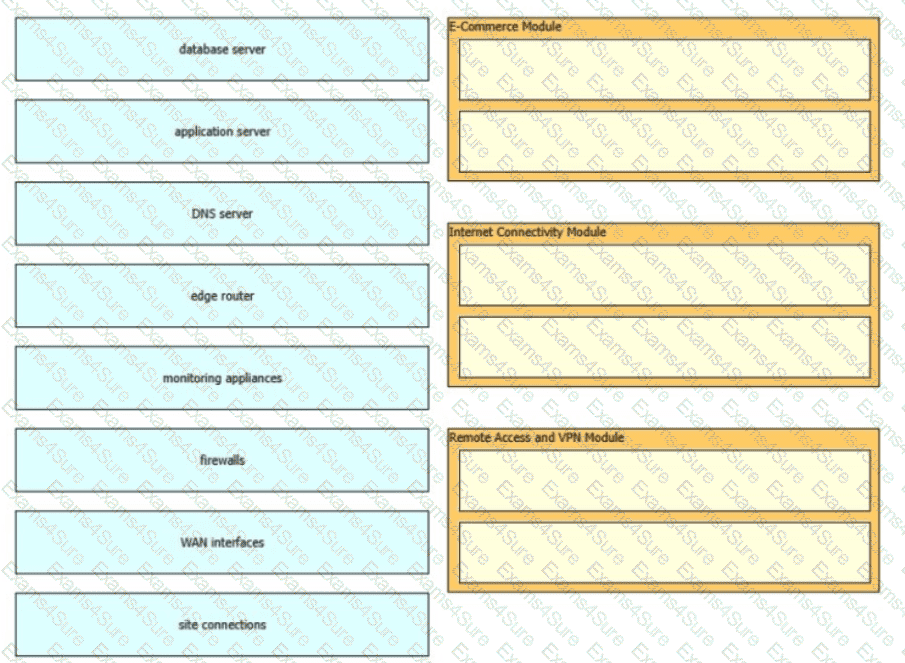
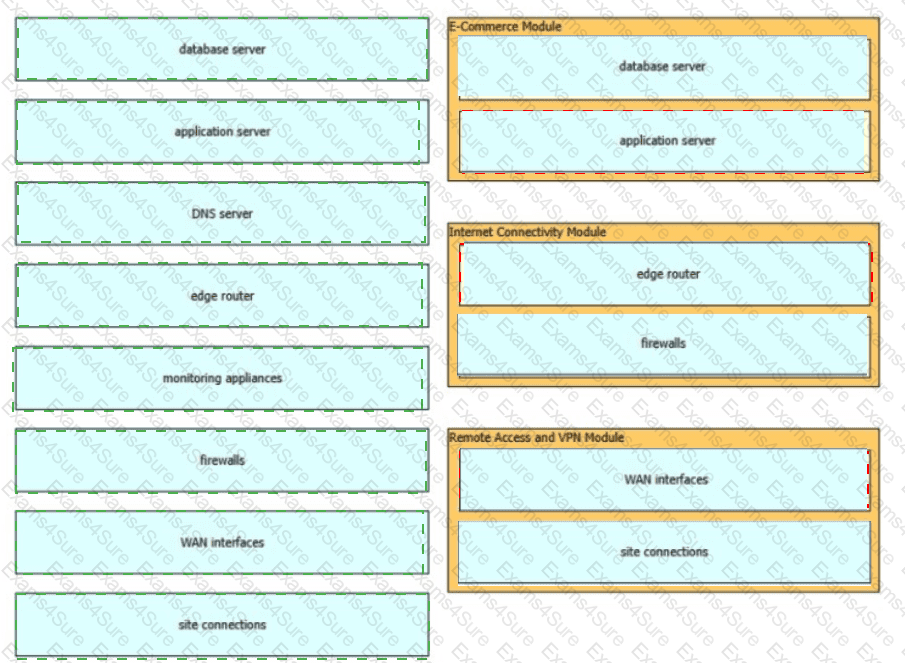
The Enterprise Edge infrastructure modules aggregate the connectivity from the various elements outside the campus—using various services and WAN technologies as needed typicaly provisioned from service providers and route the traffic into the Campus Core layer The Enterprise Edge modules perform security functions when enterprise resources connect across public networks and the internet Drag and drop the network device types from the left onto the corresponding modules on the right Not all options are used
Company XYZ, a global content provider, owns data centers on different continents. Their data center design involves a standard three-layer design with a Layer 3-only core. VRRP is used as the FHRP. They require VLAN extension across access switches in all data centers and plan to purchase a Layer 2 interconnection between two of their data centers in Europe. In the absence of other business or technical constraints, which termination point is optimal for the Layer 2 interconnection?
A multinational enterprise integrates a cloud solution with these objectives:
• Achieve seamless connectivity across different countries and regions
• Extend data center and private clouds into public clouds and provider-hosted clouds
What are two outcomes of deploying data centers and fabrics that interconnect different cloud networks? (Choose two.)
Which option is a fate-sharing characteristic in regards to network design?
When designing a WAN that will be carrying real-time traffic, what are two important reasons to consider serialization delay? (Choose two.)