
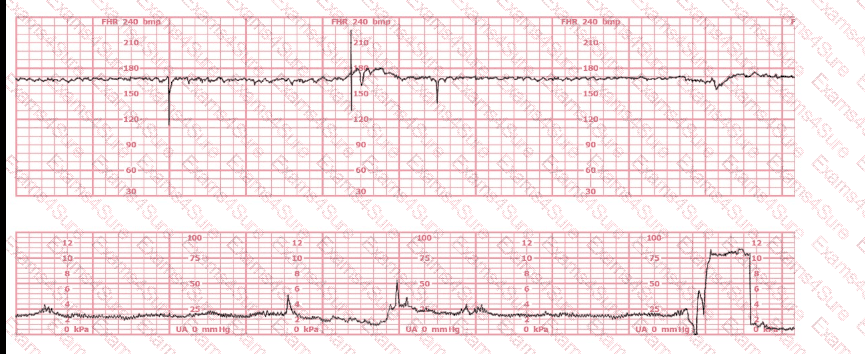
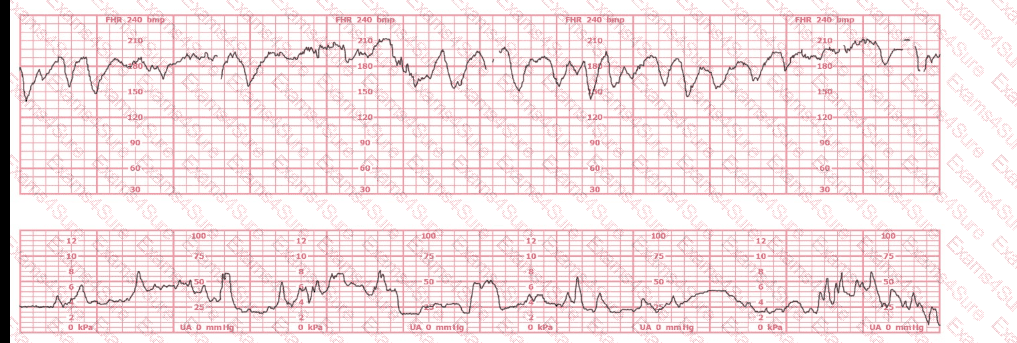
This tracing has lasted for 20 minutes in a woman who is 6 cm dilated. The most appropriate intervention is:
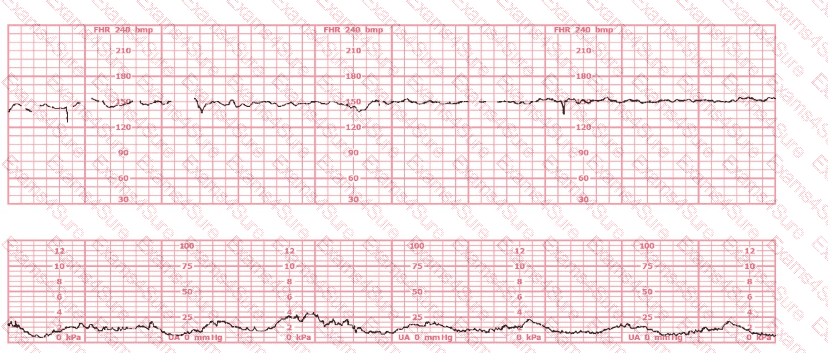
When the fetal heart rate is measured by a Doppler transducer and the intervals between heart beats are persistently identical, this shows as
Intermittent fetal heart rate auscultation for a low-risk, spontaneous laboring patient who is 4–5 centimeters dilated should be assessed at intervals every
(Full question statement)
The fetal heart rate tracing shown is obtained upon the woman's admission to labor and delivery. This tracing is most consistent with what maternal condition?
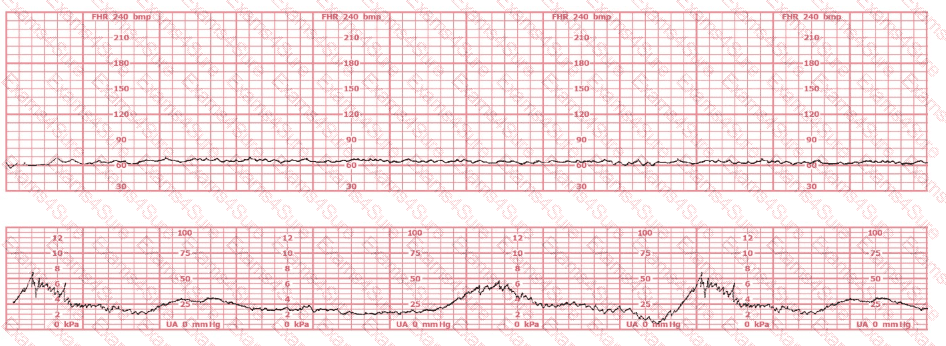
The presence of fetal breathing movements on a biophysical profile reflects adequate:
A woman is admitted at 41-weeks gestation for fetal evaluation following a motor vehicle accident. She reports that she hit her abdomen on the steering wheel. The underlying physiology of the tracing is most likely:
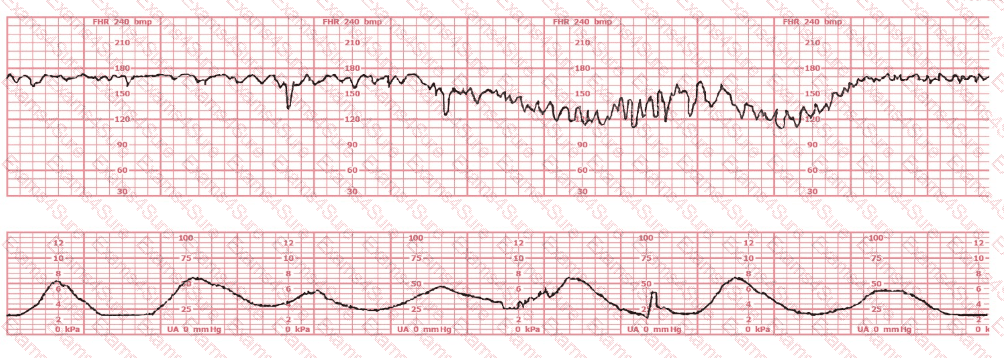
A woman in active labor at 8 cm experiences spontaneous rupture of membranes and acute bright red vaginal bleeding. The uterus is soft and nontender to palpation. The fetal monitor tracing has been normal and now shows tachycardia followed by bradycardia with minimal variability. The maternal blood pressure is 130/76 mm Hg, and the pulse is 86 beats per minute. The most likely cause of these findings is: