
Upon admission, the clinician discusses indications, risks, and benefits of electronic fetal monitoring. This reflects which ethical concept?
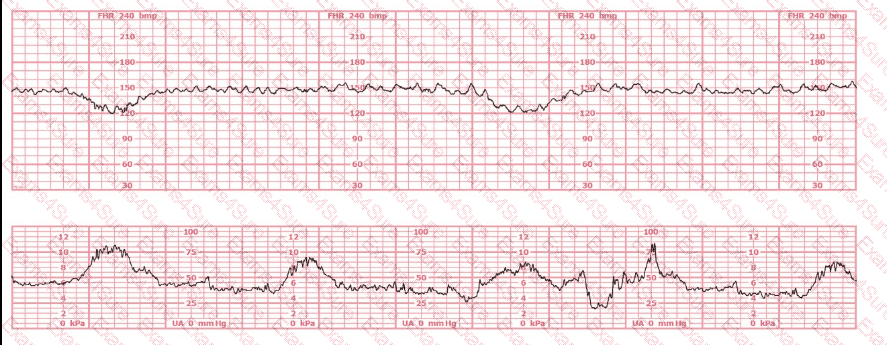
A woman at 41-weeks gestation is being induced. She is 2 cm dilated and is on oxytocin at 8 milliunits/minute. Based on the fetal heart rate tracing shown, the best initial response is to:
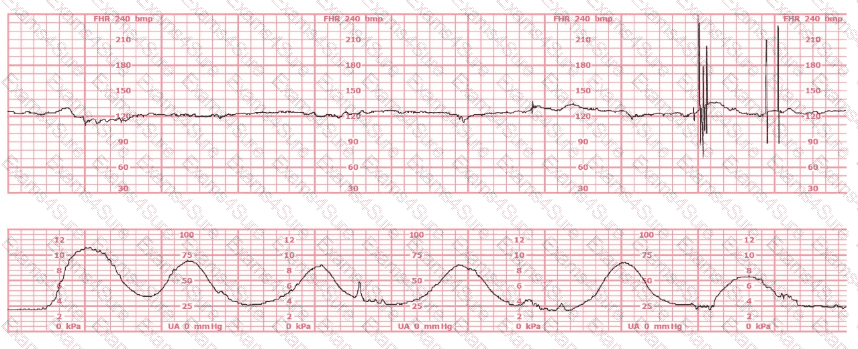
To differentiate a fetal dysrhythmia from artifact, it is important to recognize that artifact appears as deflections that are:
A woman who is one week past a confirmed due date has serial ultrasounds to determine:
A woman at 36-weeks gestation comes in because of uterine contractions radiating to the back. She has no insurance. In accordance with the Emergency Medical Treatment and Active Labor Act (EMTALA), she is obligated to be:
A 30-year-old woman (G2P0) is experiencing preterm labor at 26-weeks gestation. She is receiving magnesium sulfate for neuroprotection. Her external fetal monitoring tracing over the past 30 minutes is shown. The next step would be to:
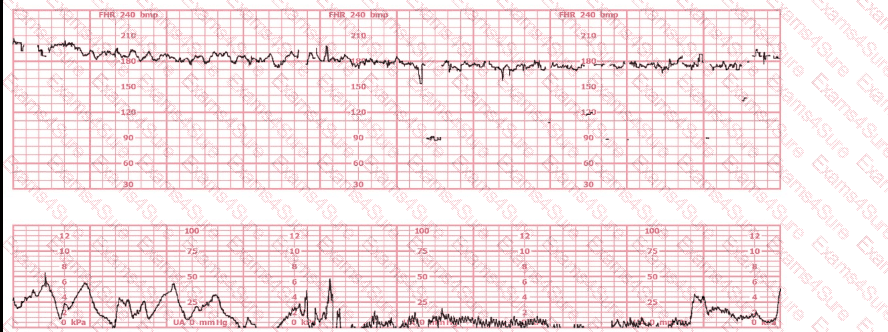
A fetal heart rate pattern characteristic of fetal neurological injury and impending intrapartum fetal demise is:
A woman is admitted to labor and delivery with vaginal bleeding. This tracing is obtained. This is most consistent with:
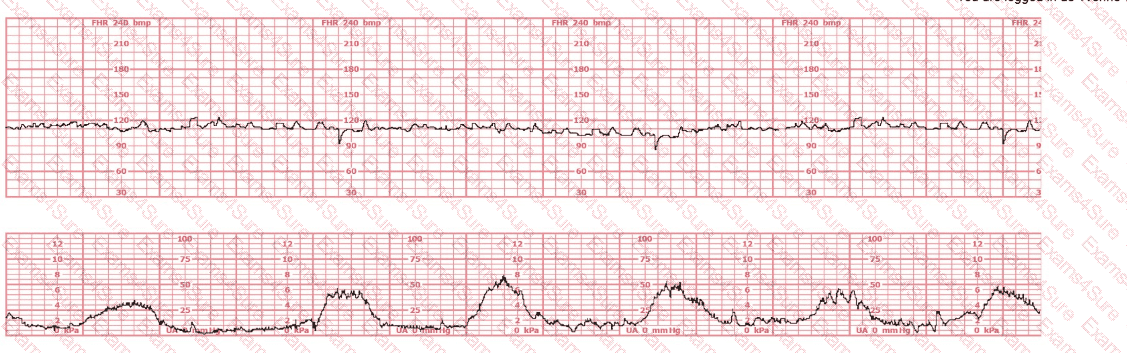
Prenatal diagnosis shows that a fetus has renal agenesis. During delivery, what type of electronic fetal heart rate pattern is most likely to be seen due to a common complication associated with this syndrome?


Exam style questions across every EFM domain
Last Update 4 days ago
Total Questions : 125
Start with our free EFM practice questions, carefully crafted to mirror the domains, phrasing, and difficulty of the real C-EFM exam. Each EFM exam question comes with a detailed rationale that explains not just which answer is correct but why the others fall short. That's how concepts stick. Use the free set to benchmark yourself: identify your NCC weak domains, see where you're losing marks, and build a focused study plan in minutes.