
.png)
MuleSoft-Platform-Architect-I Practice Questions
Salesforce Certified MuleSoft Platform Architect (Mule-Arch-201)
Last Update 3 days ago
Total Questions : 152
Dive into our fully updated and stable MuleSoft-Platform-Architect-I practice test platform, featuring all the latest Salesforce MuleSoft exam questions added this week. Our preparation tool is more than just a Salesforce study aid; it's a strategic advantage.
Our free Salesforce MuleSoft practice questions crafted to reflect the domains and difficulty of the actual exam. The detailed rationales explain the 'why' behind each answer, reinforcing key concepts about MuleSoft-Platform-Architect-I. Use this test to pinpoint which areas you need to focus your study on.

A Platinum customer uses the U.S. control plane and deploys applications to CloudHub in Singapore with a default log configuration.
The compliance officer asks where the logs and monitoring data reside?
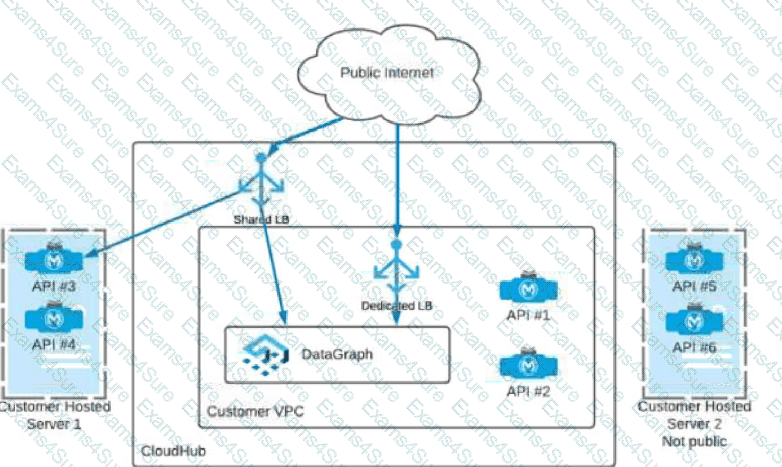
An Order API must be designed that contains significant amounts of integration logic and involves the invocation of the Product API.
The power relationship between Order API and Product API is one of "Customer/Supplier", because the Product API is used heavily throughout the organization and is developed by a dedicated development team located in the office of the CTO.
What strategy should be used to deal with the API data model of the Product API within the Order API?
What do the API invocation metrics provided by Anypoint Platform provide?
How are an API implementation, API client, and API consumer combined to invoke and process an API?
Which of the below, when used together, makes the IT Operational Model effective?
What is true about automating interactions with Anypoint Platform using tools such as Anypoint Platform REST APIs, Anypoint CU, or the Mule Maven plugin?
An API has been updated in Anypoint exchange by its API producer from version 3.1.1 to 3.2.0 following accepted semantic versioning practices and the changes have been communicated via the APIs public portal. The API endpoint does NOT change in the new version. How should the developer of an API client respond to this change?
An enterprise is embarking on the API-led digital transformation journey, and the central IT team has started to define System APIs. Currently there is no Enterprise
Data Model being defined within the enterprise, and the definition of a clean Bounded Context Data Model requires too much effort.
According to MuleSoft's recommended guidelines, how should the System API data model be defined?
An organization wants to make sure only known partners can invoke the organization's APIs. To achieve this security goal, the organization wants to enforce a Client ID Enforcement policy in API Manager so that only registered partner applications can invoke the organization's APIs. In what type of API implementation does MuleSoft recommend adding an API proxy to enforce the Client ID Enforcement policy, rather than embedding the policy directly in the application's JVM?



