Pre-Summer Sale Limited Time 65% Discount Offer - Ends in 0d 00h 00m 00s - Coupon code: 65pass65

300-215 Conducting Forensic Analysis and Incident Response Using Cisco CyberOps Technologies (CBRFIR) is now Stable and With Pass Result | Test Your Knowledge for Free

Exams4sure Dumps

300-215 Practice Questions

Conducting Forensic Analysis and Incident Response Using Cisco CyberOps Technologies (CBRFIR)

Last Update 4 hours ago
Total Questions : 131

Dive into our fully updated and stable 300-215 practice test platform, featuring all the latest CyberOps Professional exam questions added this week. Our preparation tool is more than just a Cisco study aid; it's a strategic advantage.

Our free CyberOps Professional practice questions crafted to reflect the domains and difficulty of the actual exam. The detailed rationales explain the 'why' behind each answer, reinforcing key concepts about 300-215. Use this test to pinpoint which areas you need to focus your study on.

300-215 PDF

300-215 PDF (Printable)
$48.3
$137.99

300-215 Testing Engine

300-215 PDF (Printable)
$52.5
$149.99

300-215 PDF + Testing Engine

300-215 PDF (Printable)
$65.45
$186.99
Question # 21

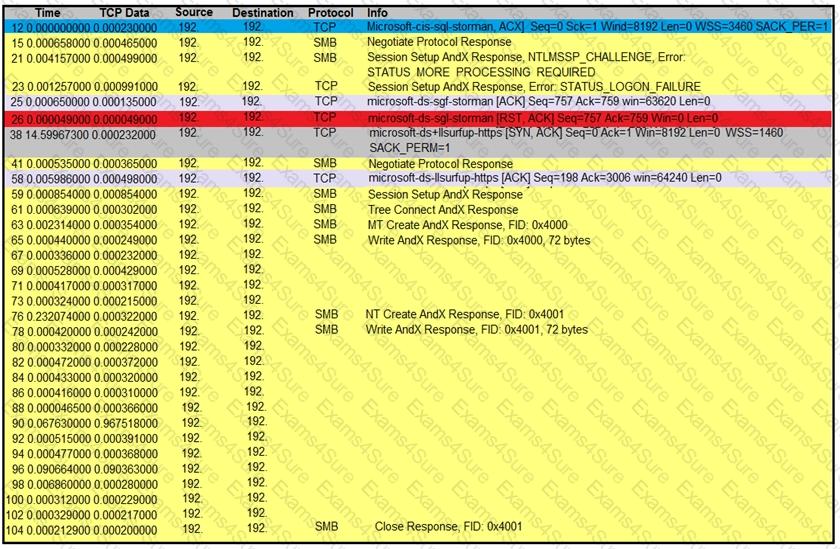
Refer to the exhibit.
Question # 21

An engineer is analyzing a TCP stream in Wireshark after a suspicious email with a URL. What should be determined about the SMB traffic from this stream?

Options:

A.  

It is redirecting to a malicious phishing website

B.  

It is exploiting redirect vulnerability

C.  

It is requesting authentication on the user site.

D.  

It is sharing access to files and printers.

Discussion 0
Question # 22

A malware outbreak revealed that a firewall was misconfigured, allowing external access to the SharePoint server. What should the security team do next?

Options:

A.  

Scan for and fix vulnerabilities on the firewall and server

B.  

Harden the SharePoint server

C.  

Disable external IP communications on all firewalls

D.  

Review and update all firewall rules and the network security policy

Discussion 0
Question # 23

A new zero-day vulnerability is discovered in the web application. Vulnerability does not require physical access and can be exploited remotely. Attackers are exploiting the new vulnerability by submitting a form with malicious content that grants them access to the server. After exploitation, attackers delete the log files to hide traces. Which two actions should the security engineer take next? (Choose two.)

Options:

A.  

Validate input upon submission.

B.  

Block connections on port 443.

C.  

Install antivirus.

D.  

Update web application to the latest version.

E.  

Enable file integrity monitoring.

Discussion 0
Question # 24

A financial company handling international transactions recently experienced a complex security incident The incident involves simultaneous DDoS attacks, suspected internal data leakage and the discovery of sophisticated malware implants that have remained dormant until triggered remotely During the incident it became clear that the current procedures are inadequate and plans to tackle issues were created on the go To counter this problem going forward, the IR team is developing an incident playbook to be used if a similar incident reoccurs Which set of elements of the playbook must be introduced?


Options:

A.  

Introducing DDoS mitigation procedures, internal data leak investigations, and proactive malware containment

B.  

Establishing real-time collaboration procedures, increasing data encryption and revising access controls

C.  

Engaging third-party cybersecurity experts expanding throat intelligence sharing and improving incident documentation

D.  

Enhancing monitoring protocols, updating firewall rules, and automating traffic analysis tasks efficiently

Discussion 0
Question # 25

Refer to the exhibit.

Question # 25

What does the exhibit indicate?

Options:

A.  

The new file is created under the Software\Classes disk folder.

B.  

A UAC bypass is created by modifying user-accessible registry settings.

C.  

A scheduled task named "DelegateExecute" is created.

D.  

The shell software is modified via PowerShell.

Discussion 0
Question # 26

Refer to the exhibit.

Question # 26

Options:

A.  

hex encoding

B.  

metamorphic encoding

C.  

ASCII85 encoding

D.  

Base64 encoding

Discussion 0
Question # 27

An organization experienced a sophisticated phishing attack that resulted in the compromise of confidential information from thousands of user accounts. The threat actor used a land and expand approach, where initially accessed account was used to spread emails further. The organization's cybersecurity team must conduct an in-depth root cause analysis to uncover the central factor or factors responsible for the success of the phishing attack. The very first victim of the attack was user with email 500236186@test.com. The primary objective is to formulate effective strategies for preventing similar incidents in the future. What should the cybersecurity engineer prioritize in the root cause analysis report to demonstrate the underlying cause of the incident?
Options:

A.  

investigation into the specific vulnerabilities or weaknesses in the organization's email security systems that were exploited by the attackers

B.  

evaluation of the organization's incident response procedures and the performance of the incident response team

C.  

examination of the organization's network traffic logs to identify patterns of unusual behavior leading up to the attack

D.  

comprehensive analysis of the initial user for presence of an insider who gained monetary value by allowing the attack to happen

Discussion 0
Question # 28

Question # 28

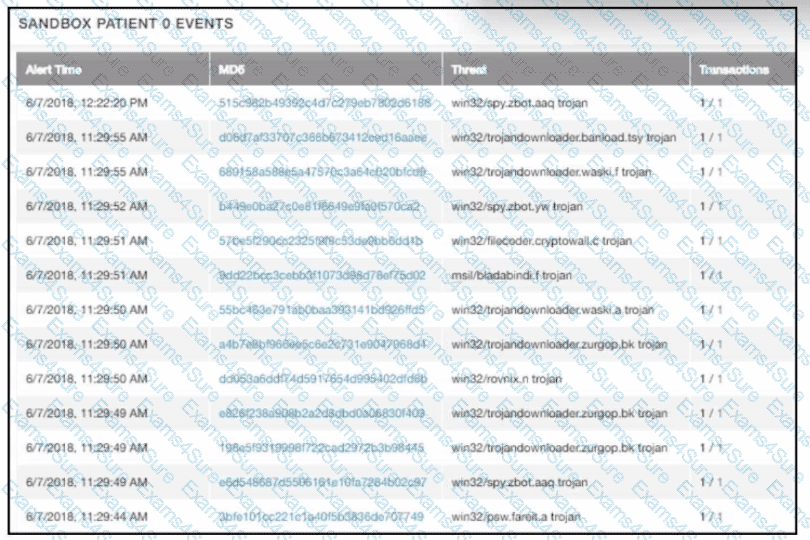
multiple machines behave abnormally. A sandbox analysis reveals malware. What must the administrator determine next?

Options:

A.  

if Patient 0 still demonstrates suspicious behavior

B.  

source code of the malicious attachment

C.  

if the file in Patient 0 is encrypted

D.  

if Patient 0 tried to connect to another workstation

Discussion 0
Question # 29

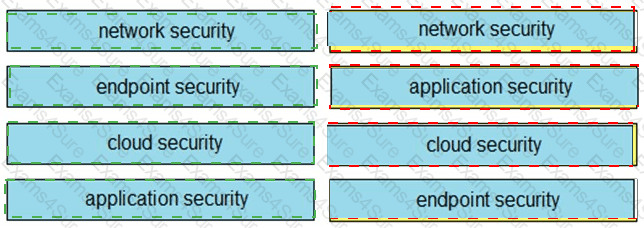
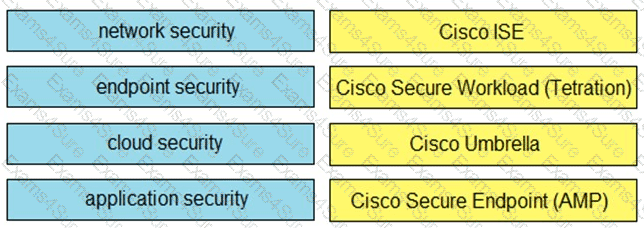
Drag and drop the capabilities on the left onto the Cisco security solutions on the right.
Question # 29

Options:

Discussion 0
Question # 30

Which technique exemplifies an antiforensic technique?

Options:

A.  

steganalysis

B.  

data replication

C.  

stepheorology

D.  

steganography

Discussion 0
Get 300-215 dumps and pass your exam in 24 hours!

Free Exams Sample Questions