
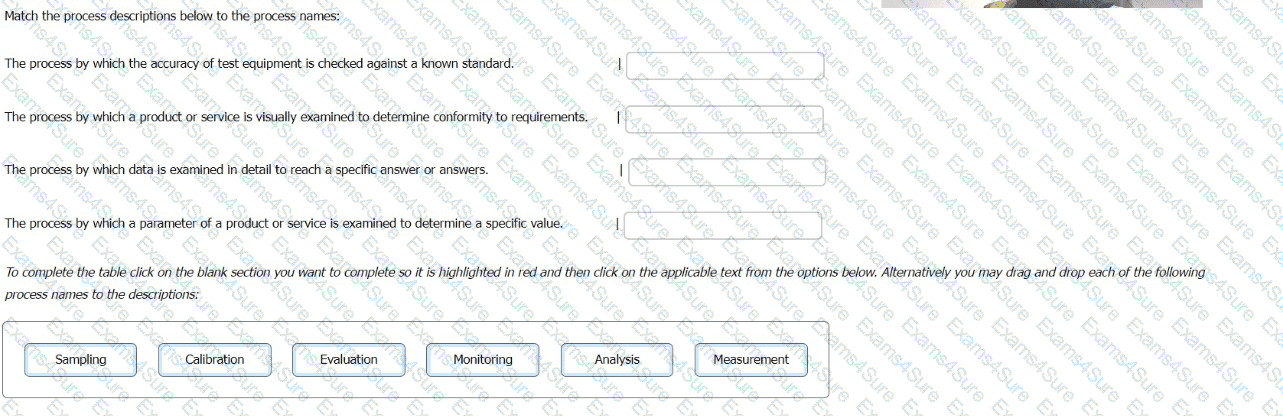
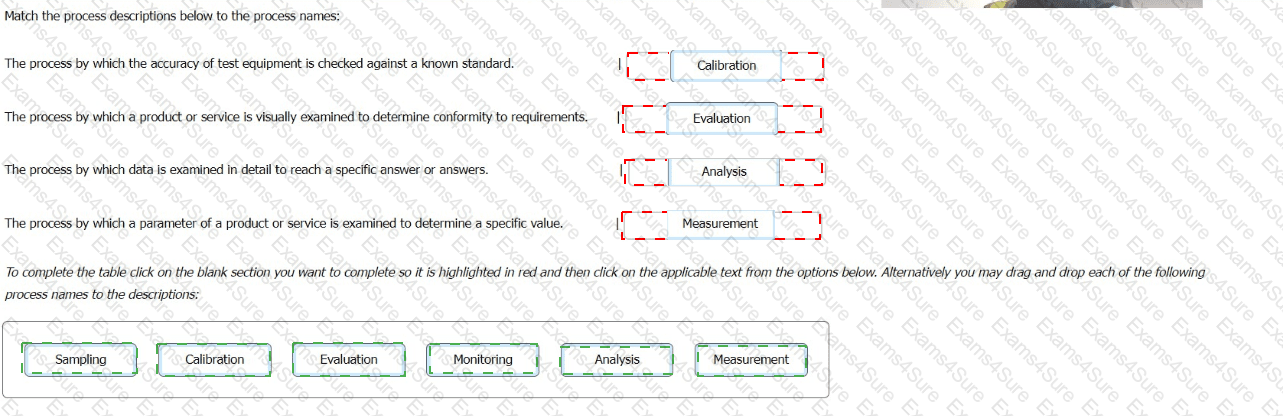
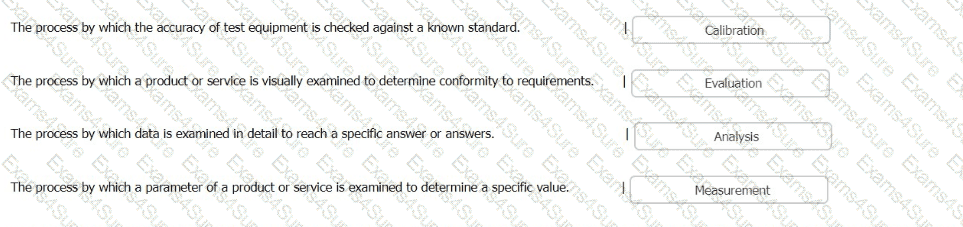
 A white background with black text Description automatically generated
You work for an organisation, ' ABC ' , which provides packaged food to the public. You are asked to lead a team (you as the leader and two other
auditors) to audit an external provider, ' XYZ ' , which provides packaging materials to your organisation. It is 4 pm, and the audit is dlose to an end;
you are having an internal meeting with the team to decide what will be presented to the auditee during the Closing meeting. The Closing meeting
was scheduled for 5 pm.
' XYZ ' has two manufacturing lines: M1 is a clean room for primary packaging materials (i.e. will be in direct contact with the food), and M2 is for
secondary materials (i.e. will not be in direct contact with food).
Auditor 1 audited the two manufacturing lines.
You: " What findings would you report? "
Auditor 1: " I have one issue. Earlier today in the morning I saw some secondary material stocked in the clean room. I would propose raising a
nonconformity. "
You: " How would you write the nonconformity? "
Auditor 1: " In the clean room, there was a pallet with secondary materials. "
What additional information would you add to this text to complete the nonconformity report? Select six.
The ISO 9001 clause 5.1.1 states top management shall demonstrate leadership and commitment with respect to the quality management system.
In the context of the ISO 9001 management system certification, select the one correct description of top management ' s responsibilities.
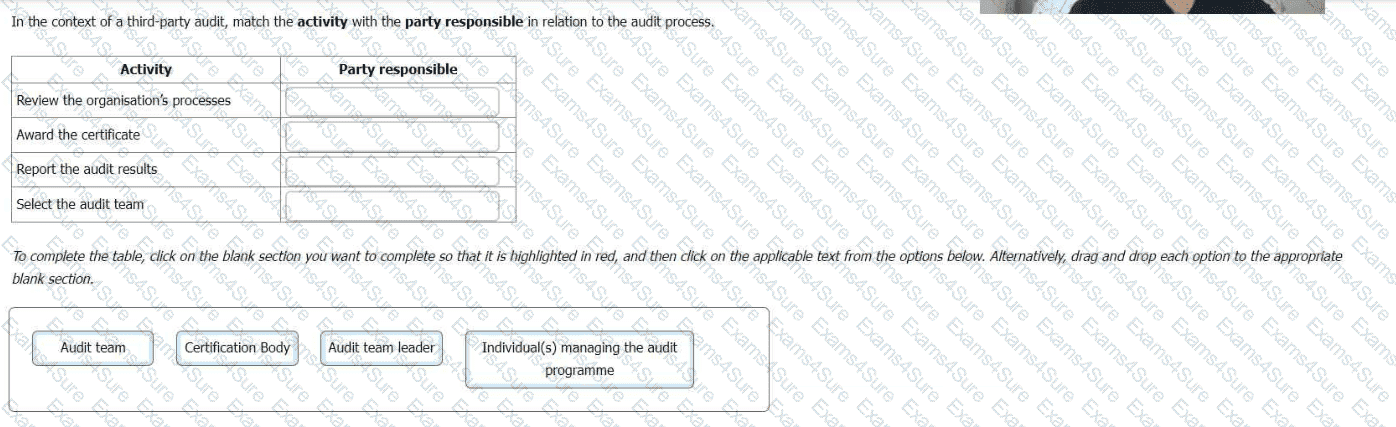
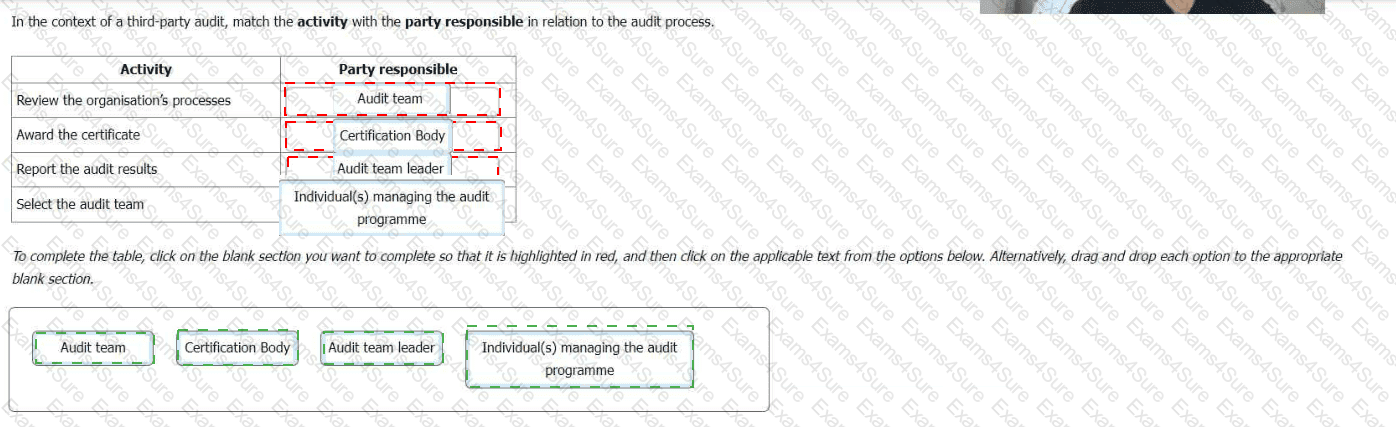
In the context of a third-party audit, match the activity with the party responsible in relation to the audit process.
You are conducting a third-party audit to ISO 9001 and the next item on your audit plan is ' internal auditing ' .
When reviewing a sample of audit records up to 5 years previously, you find that many contain non-conformance reports and no actions have been taken. You interview the Quality Manager.
You: " I have noted that many of the older files contain non-conformances that have not had any corrective action taken. "
Quality Manager: " Because the business is always changing, the departmental managers tell me that the non-conformances are no longer applicable. I made a decision that any non-conformance over 3 years old is automatically closed "
You: " Do you obtain any confirmation beforehand from the appropriate departments that the non-conformances are no longer applicable. "
Quality Manager: " No, because they are so old I consider that they are no longer appropriate. Please remember that we take a risk-based approach which means we audit where and when it is considered important to do so.
Select one course of action you would now take from the options.
Scenario 4:
TD Advertising is a print management company based in Chicago. The company offers design services, digital printing, storage, and distribution. As TD expanded, its management recognized that success depended on adopting new technologies and improving quality.
To ensure customer satisfaction and quality improvement, the company decided to pursue ISO 9001 certification.
After implementing the QMS, TD hired a well-known certification body for an audit. Anne Key was appointed as the audit team leader. She received a document listing the audit team members, audit scope, criteria, duration, and audit engagement limits.
Anne reviewed the document and approved the audit mandate. The certification body and TD’s top management signed the certification agreement.
Before contacting TD, Anne reviewed the audit scope and noticed that TD made changes to it due to the adoption of new printing equipment. However, Anne disagreed with the changes, stating they would affect the audit timeline. She considered withdrawing from the audit.
In scenario 4, the audit team determined the audit feasibility by considering only the resources available for the audit. Is this acceptable?
(Select from the options which two of the following documented information examples are prepared by the auditor as a member of an audit team.)
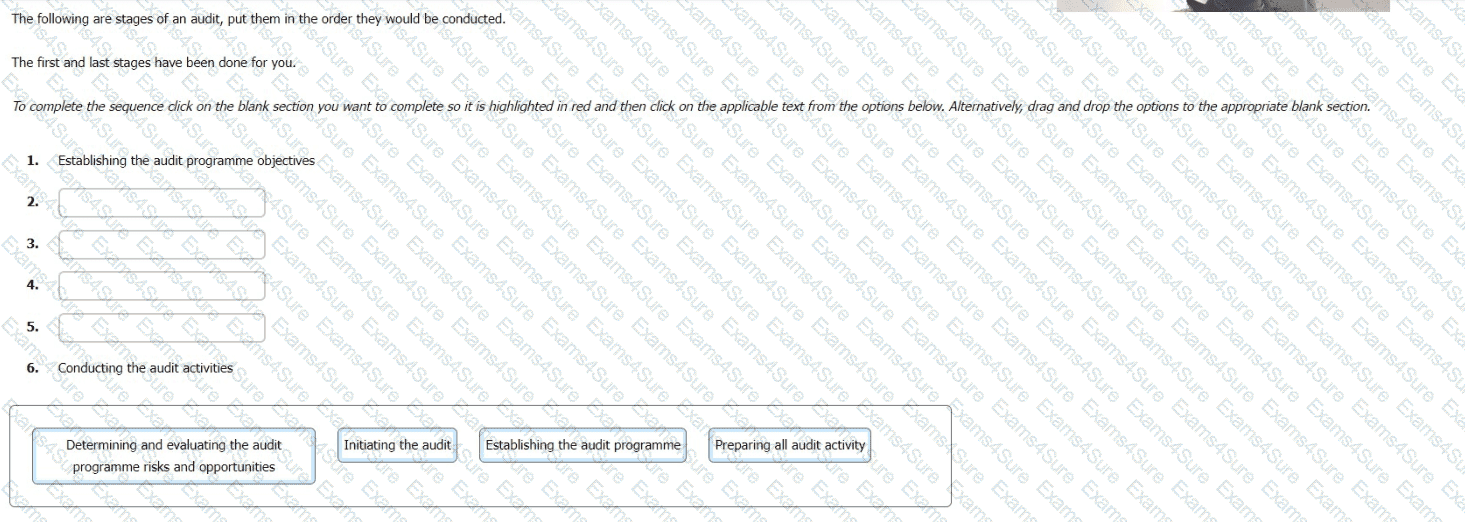
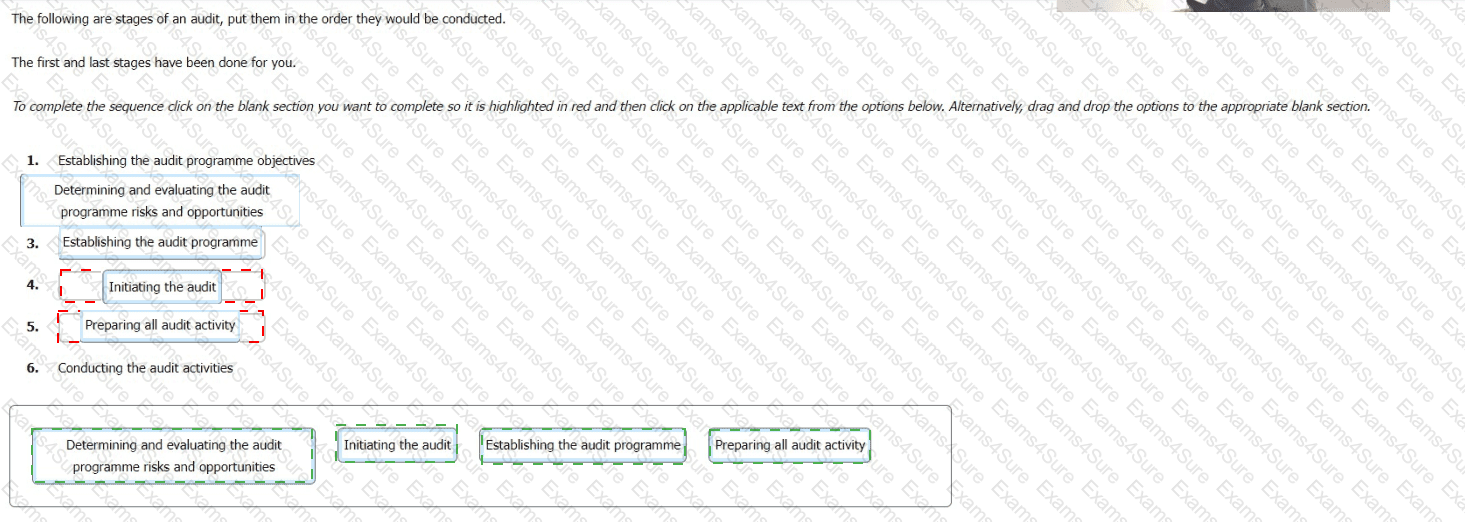
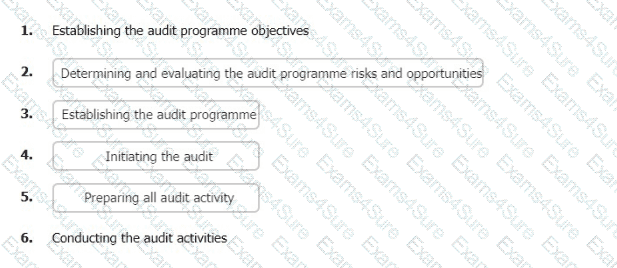
The following are stages of an audit, put them in the order they would be conducted.
Whistlekleen is a national dry cleaning and laundry company with 50 shops. You are conducting a surveillance audit of the Head Office and are sampling customer complaints. 80% of complaints originate from five shops in the same region. Most of these complaints
relate to customer laundry not being cleaned as customers require. The Quality Manager tells you that these are the oldest shops in the company. The cleaning equipment needs replacing but the company cannot afford it now. You learn that the shop managers were
told to dismiss most of the complaints because of the poor quality of the laundered materials.
On raising the matter with senior management, you are told that there are plans to replace the equipment in these shops over the next five years.
You raised a nonconformity against clause 8.5.1 of ISO 9001.
Based on the scenario, select the three options which best describe the evidence for raising such a nonconformity.




